
Electrical Installations
Extractor Fan Installation in Surrey & London
Extractor fan installation means fitting a bathroom, kitchen or utility fan that takes steam and moisture outside. Replacing an existing fan often takes an hour or two; a new fan with ducting through a wall or roof can take most of a day. The electrical work is certified, usually with a Minor Electrical Installation Works Certificate.
Condensation, mould on the ceiling and mirrors that never clear are usually a ventilation problem. A properly sized and positioned extractor fan is the fix, and it is a small job compared with repainting a mouldy bathroom every year.
Joe fits standard, timer and humidity-sensing fans in bathrooms, en-suites, kitchens and utility rooms, wiring them to the light or to their own switch as you prefer.
Typical work
- New bathroom and en-suite extractor fans
- Humidity-controlled fans that run only when needed
- Kitchen and utility room extraction
- Replacing a noisy or failed fan with a quieter model
- Ceiling fans in bedrooms and living rooms
Recent jobs
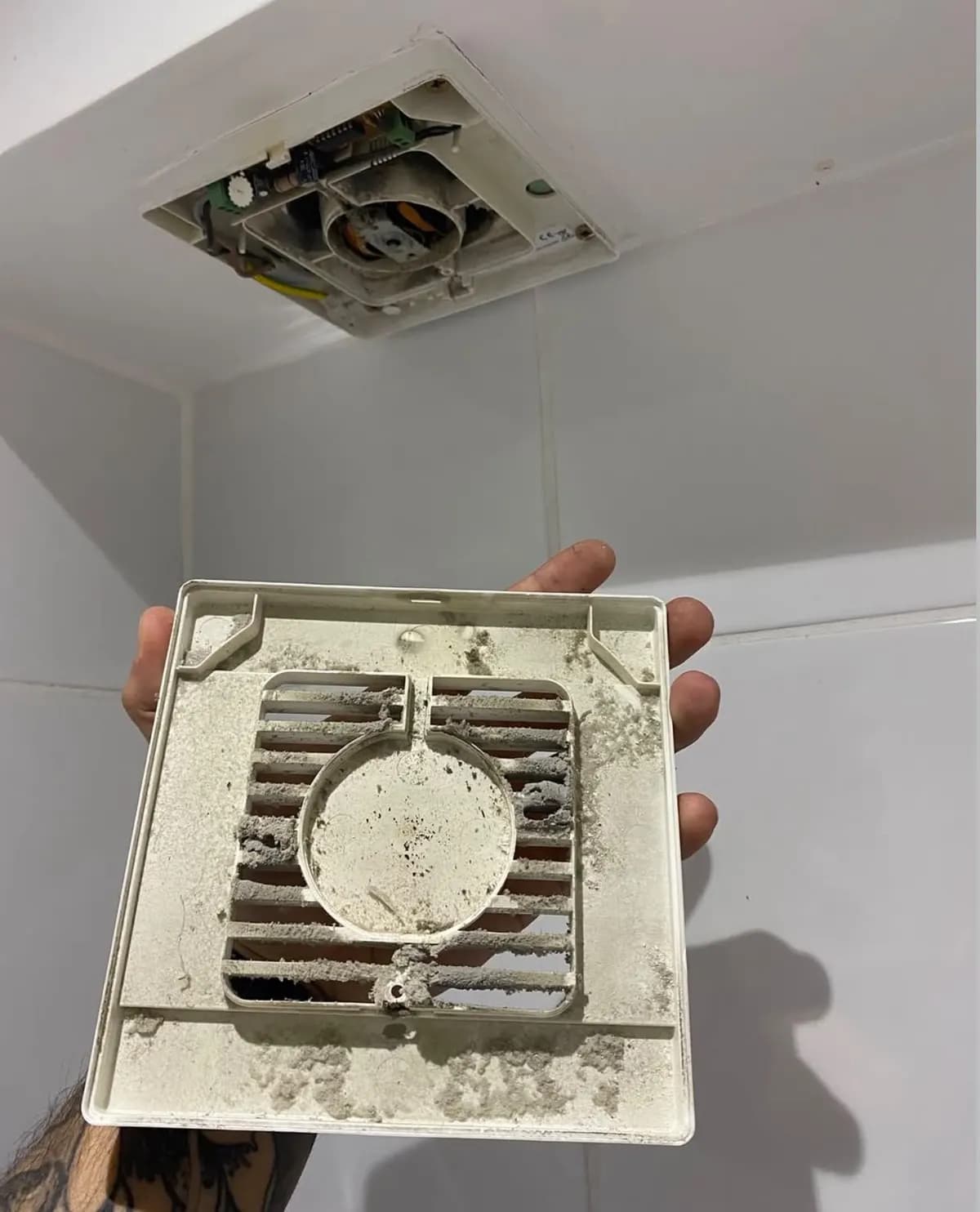 Before
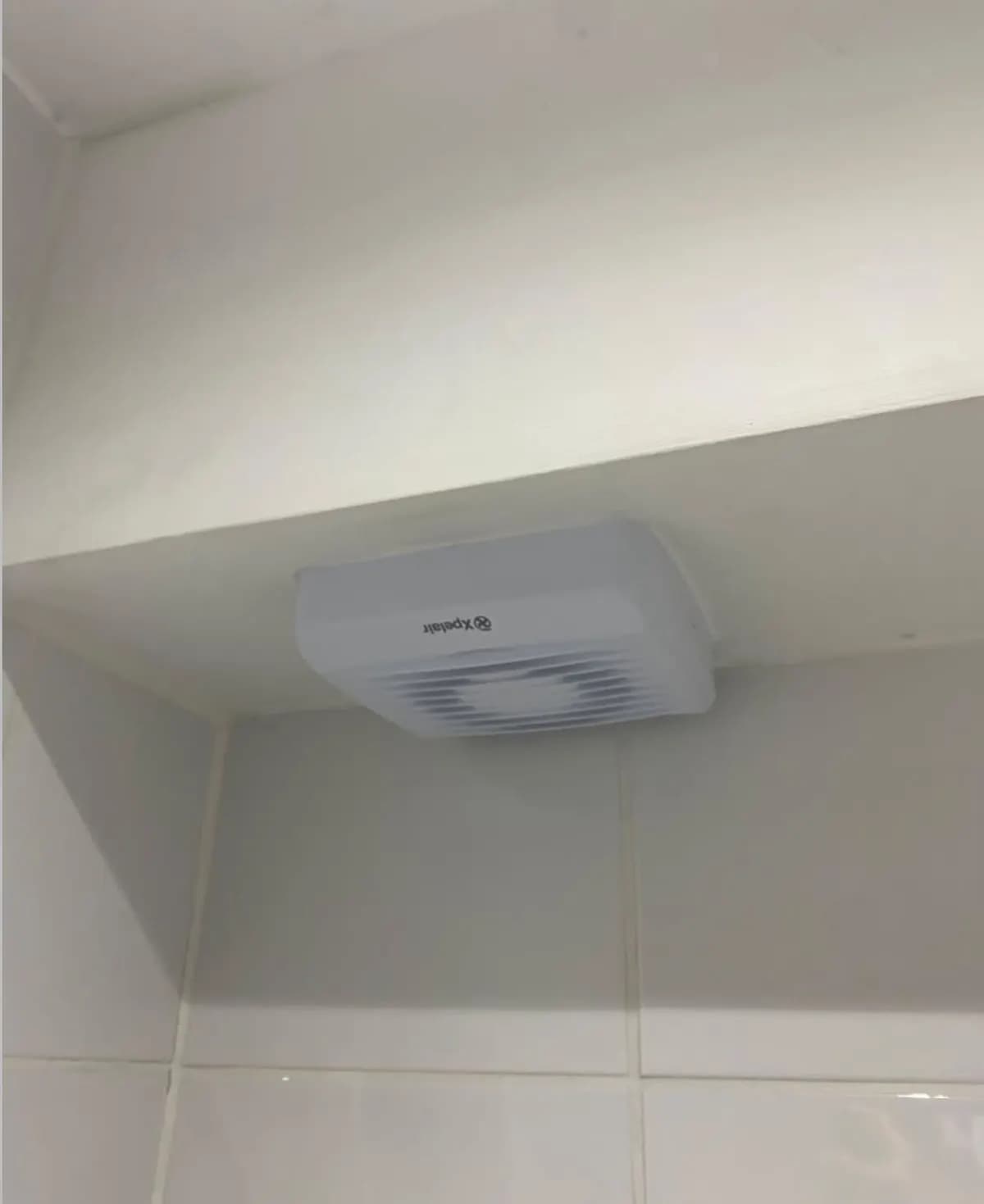 After
AfterExtractor fan upgrade in RedhillExtractor Fan Installation 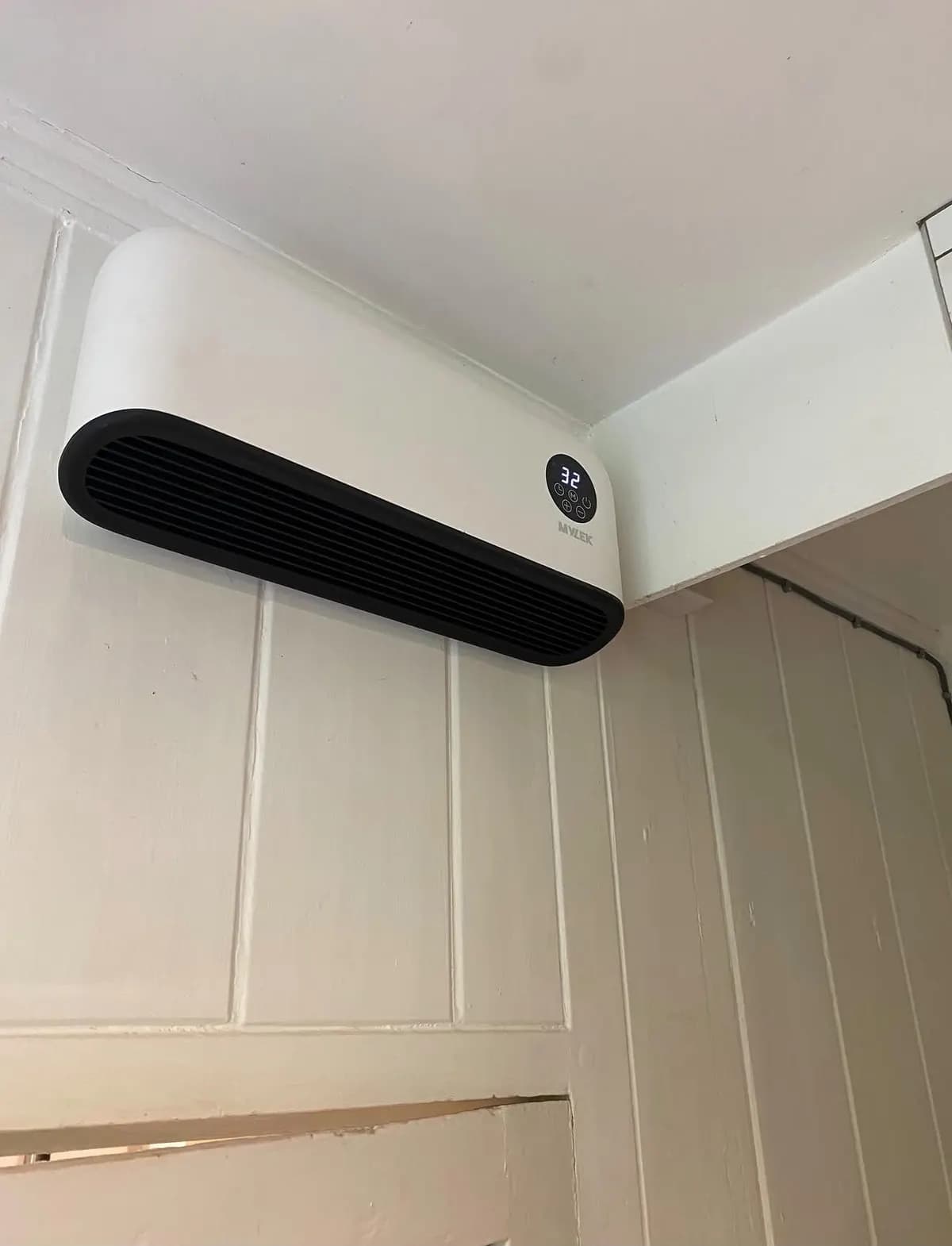
Bathroom fan heater installed in RedhillExtractor Fan Installation
What the job involves
A new fan needs three things: a route to the outside, a power supply and a way to control it. The duct goes through an outside wall, a window or the roof via the loft, and is kept as short and straight as possible so the fan can move air properly. The supply is usually taken from the lighting circuit with an isolator, so the fan can be switched off safely for cleaning or repair.
In a bathroom the fan and its controls must suit the zone they sit in. Fans close to a bath or shower need the right level of water protection, and some are low-voltage models fed from a transformer outside the zone.
Signs you need this
- Black mould on the bathroom ceiling or around the window
- Mirrors and windows that stay steamed up long after a shower
- Peeling paint or damp patches on the walls
- Cooking smells and condensation that spread through the house
- An existing fan that is too weak to clear the room
Choosing the right fan
Building Regulations set minimum extraction rates for kitchens, bathrooms and utility rooms, so the fan has to be big enough for the room. Beyond that, the choice is about control. A timer overrun keeps it running after the light goes off, a humidity sensor runs it only when the air is damp, and some continuous low-speed fans run quietly all the time. For noisy or failing fans, see fan repairs.
What affects the cost
Fitting a new fan where one already exists is the simplest job. The work grows when a new hole has to be cored through a solid wall, when ducting runs a long way through the loft, or when a new supply and switch are needed. The type of fan matters too: inline fans in the loft, humidity-sensing units and low-voltage models suit different rooms. If the fan needs a new circuit, see wiring installations.
Where we do this work
Extractor Fan Installation from our base in Redhill, anywhere in Surrey including Redhill, Reigate, Merstham, Nutfield, Bletchingley and the surrounding towns, plus London and nearby counties. Larger commercial jobs further afield are welcome by enquiry. See all areas covered.
Common questions
Which type of fan do I need?
It depends on the room size, how the room is used and where the duct can go. A small bathroom suits a wall or ceiling fan with a timer, while a busy family bathroom or an en-suite without a window often benefits from a humidity-controlled fan.
Can a fan be wired to come on with the light?
Yes, with an overrun timer so it keeps running for a few minutes after the light goes off. That is the most common set-up for bathrooms without a window.
Do I need a fan if my bathroom has a window?
A window helps, but in winter few people leave it open long enough to clear the steam. A fan removes moist air at source, and Building Regulations expect extract ventilation in new bathrooms.
Can a fan go above the shower?
Yes, if it is suitable for that zone. Fans close to a bath or shower need the right water protection, and some are low-voltage models with the transformer fitted outside the zone.
Why does my bathroom still get mould with a fan?
The fan may be too small, blocked, running too briefly or venting into the loft rather than outside. Checking the duct and moving to a humidity-controlled fan or a longer overrun usually solves it.
Do you fit ceiling fans?
Yes. A ceiling fan needs a fixing strong enough to carry its weight and movement, plus a suitable supply and control, which usually means replacing a ceiling light point.
Ready to talk about your electrical work?
Tell Joe what you need and where you are, and he will come back to you with a clear quote. Call, send a WhatsApp message, or use the quote form.