
EV Charging
EV Charger Installation in Surrey & London
EV charger installation means fitting a dedicated charge point on its own circuit, after checking that your supply, consumer unit and earthing can take it. A straightforward home installation is often completed in a day. The circuit is certified with an Electrical Installation Certificate, building control is notified, and the network operator is told about the charger.
Charging at home is cheaper and more convenient than any public charger, and a dedicated charge point is faster and safer than a three-pin plug. Joe installs home charge points on driveways, garages and private parking, and workplace chargers for businesses.
The installation covers checking your existing supply and fuse board, running the cable, fitting and commissioning the charger, and showing you how to use it. Advice on which charger suits your car and your parking is part of the job.
Typical work
- Home charge points on driveways, garages and car ports
- Tethered and untethered 7 kW chargers
- Workplace charge points for staff and visitors
- Supply and fuse board checks before installation
- Chargers for flats and shared parking, where the supply allows
Recent jobs
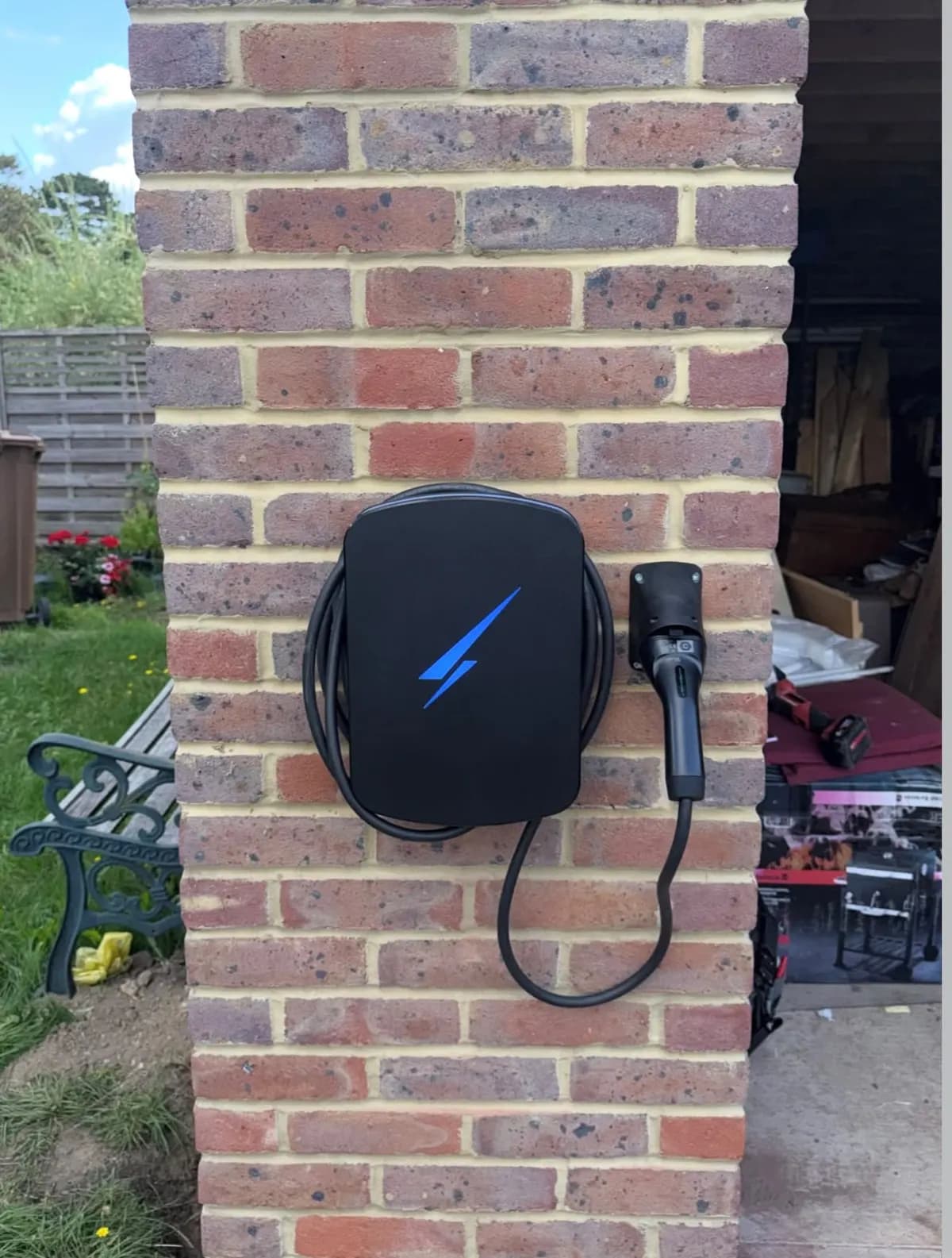
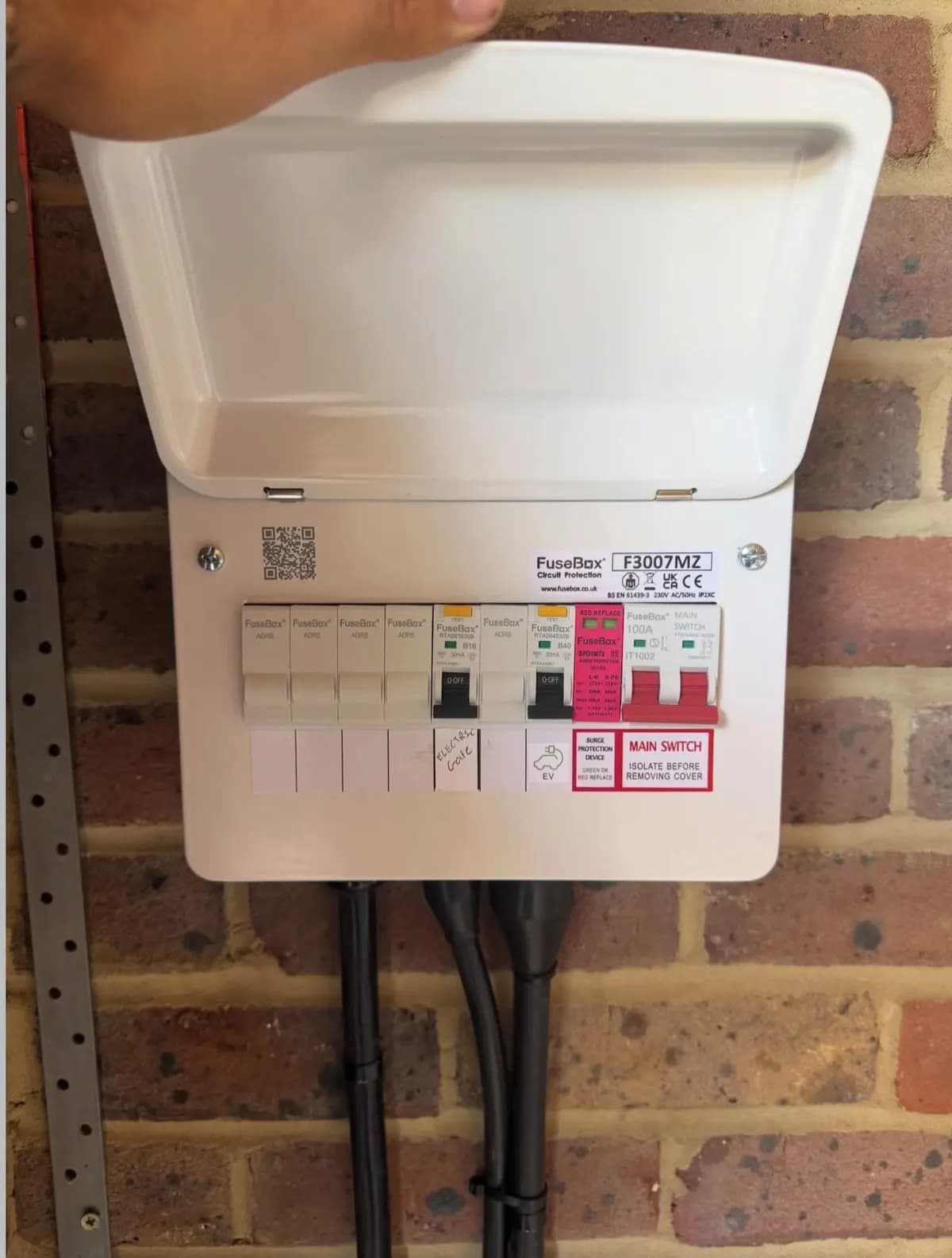
Consumer unit install + EV charger install in ReigateEV Charger Installation
What the job involves
A survey comes first: the size of the incoming supply and main fuse, the condition and spare capacity of the consumer unit, the earthing arrangement, and where the charger and cable will go. The charger then goes on its own dedicated circuit with suitable RCD protection, and is set up, tested and handed over with the certificate.
Earthing needs particular care. Many homes have a PME earth, and BS 7671 has specific requirements for EV charging on these supplies. They are usually met either by a charger with built-in protection against a broken supply neutral or by a separate earth electrode, depending on the property.
Before you choose a charger
- Off-street parking, so the cable does not cross a public pavement
- A tethered cable or a socket for your own cable
- Smart functions, which chargers for homes and workplaces in Great Britain must have under the 2021 smart charge point regulations
- Your electricity tariff, as off-peak rates are where home charging makes most sense
- Other large loads on the supply, such as electric showers, heat pumps or solar panels
Our guide on what to check before installing a home EV charger goes through these in more detail.
Grants
Grants have been available for some households, such as people in flats or rented homes, and for some businesses. Eligibility and amounts change, so check the current Office for Zero Emission Vehicles (OZEV) schemes on GOV.UK before relying on one.
What affects the cost
The distance from the consumer unit to the charger, how the cable has to be run, whether the consumer unit or main fuse needs work first, the earthing arrangement and the charger you choose. Workplace installations add the number of chargers, load management between them and cable routes across car parks. If the board needs attention first, see fuse and breaker work and wiring installations.
Certificates and regulations
The new circuit is installed to BS 7671 and certified with an Electrical Installation Certificate. A new circuit is notifiable work in England under Part P. The local electricity network operator must also be told about the charger, and where the supply is already heavily loaded they may need to approve it before it goes in.
Where we do this work
EV Charger Installation from our base in Redhill, anywhere in Surrey including Redhill, Reigate, Merstham, Nutfield, Bletchingley and the surrounding towns, plus London and nearby counties. Larger commercial jobs further afield are welcome by enquiry. See all areas covered.
Common questions
Do I need off-street parking?
A home charger needs the cable to reach your car safely without crossing a public pavement, so a driveway, garage or private parking space is normally needed.
Will my fuse board cope with a charger?
That is one of the first things checked. Many homes have enough capacity, but an older consumer unit or one with no spare ways may need upgrading, and occasionally the main fuse or supply needs the network operator to look at it.
Which charger should I choose?
It depends on your car's charging capability, whether you want a tethered cable, where it will be mounted and how you want to use smart scheduling with your tariff. Most UK home chargers are 7 kW single-phase units, as that suits a typical home supply.
Are there grants for home EV chargers?
Grants have been available for some households and businesses, but eligibility and amounts change. Check the current OZEV schemes on GOV.UK to see what applies to you before booking.
How long does an EV charger installation take?
A straightforward installation with a short cable run is often completed in a day. Longer cable runs, groundwork or a consumer unit upgrade add time.
Does the network operator need to know?
Yes, the local network operator must be notified about a home charge point, and the installer normally handles this. Where the supply is limited, approval may be needed before the charger goes in.
Can you install workplace chargers?
Yes. Workplace charge points for staff and visitors are planned around the capacity of the existing commercial supply and the number of chargers needed.
Ready to talk about your electrical work?
Tell Joe what you need and where you are, and he will come back to you with a clear quote. Call, send a WhatsApp message, or use the quote form.